How to Choose a Dog Walker You Can Actually Trust
By the Pets Locally team
Updated 2026
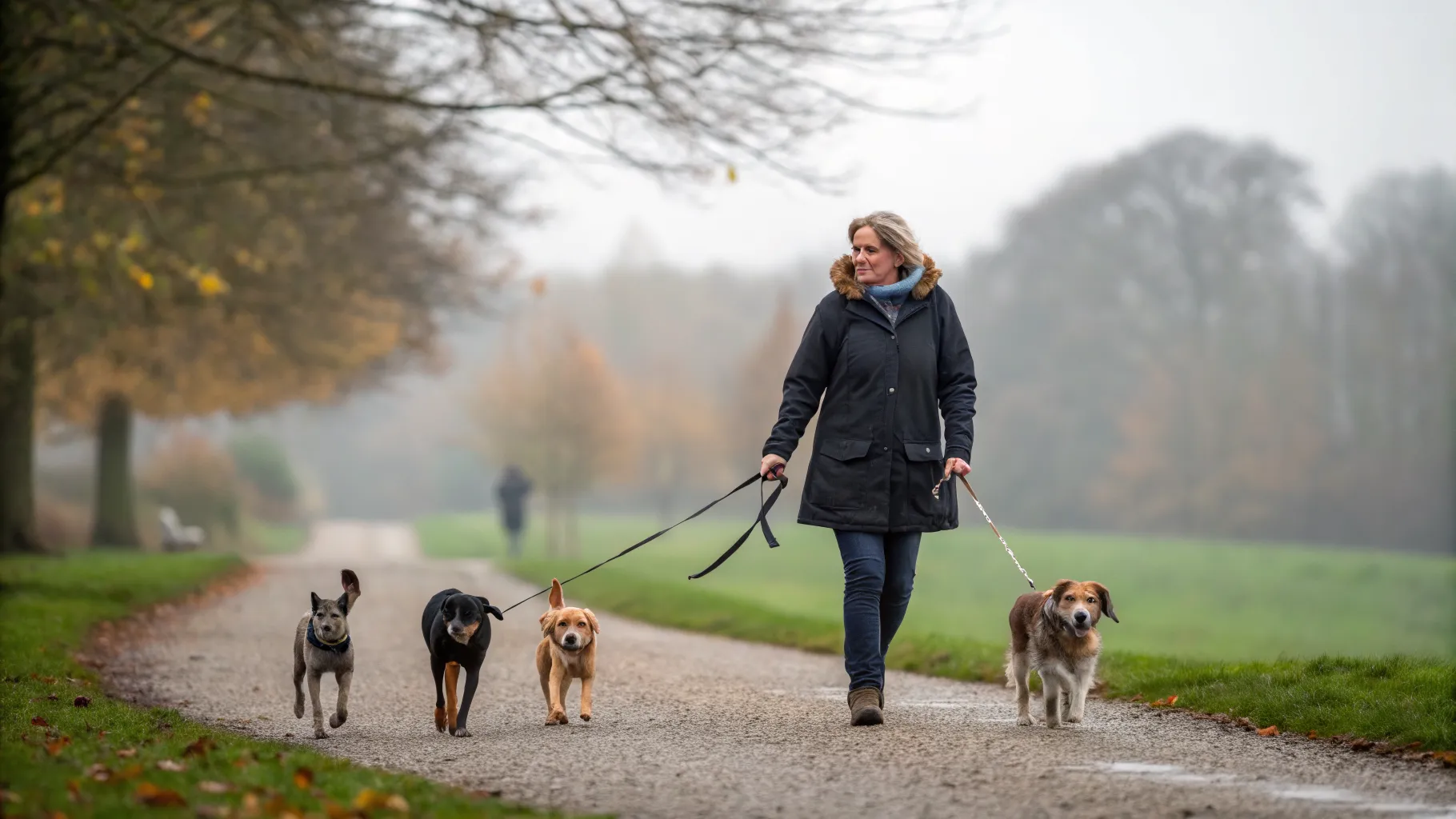
Handing your house keys and your dog to a near stranger is a strange leap of faith. Most owners do it because the alternative is a dog left alone for nine hours while they are at work. The good news is that you can tell a careful, professional walker from a risky one in about two conversations, if you know what to ask and what the answers should sound like.
This guide walks you through exactly that: the checks that matter, the questions that flush out problems, and the small signs that tell you a walker actually cares about your dog rather than just collecting it.
Start with the non-negotiables
Before you get into temperament and chemistry, three things should be in place. If a walker cannot show you these, keep looking.
Insurance. A professional dog walker should carry two distinct types of cover, and they are not the same thing. Public liability covers injury or damage your dog causes to other people or their property while it is in the walker’s care. Care, custody and control covers injury, illness or loss of your dog itself while the walker is responsible for it. A walker who only has public liability is not covered if your dog is hurt or runs off on their watch. Ask for the insurer’s name, the policy number, the cover limit and the renewal date, then check the policy is actually in force. Many specialist policies also include key cover, which protects you if your house keys are lost.
A Basic DBS certificate. This is where a lot of online advice gets it wrong. Dog walking is not a regulated activity under the law, so walkers are not eligible for a Standard or Enhanced DBS check (those are reserved for roles involving direct contact with children or vulnerable adults). They can, and the good ones do, get a Basic DBS check, which shows any unspent convictions. If a walker tells you they hold an “enhanced check for dog walking”, treat it as a small red flag: it suggests they do not really understand the rules. A current Basic DBS is the right answer here.
Canine first aid training. Ask whether they hold a current canine first aid certificate and carry a kit on every walk. Dogs cut paws, overheat in summer and get stung. You want someone who knows what to do in the ten minutes before a vet.
Understand who is legally responsible on the walk
This part surprises owners. Under Section 3 of the Dangerous Dogs Act 1991, allowing a dog to be dangerously out of control is an offence in any place, public or private. Both the owner and the person in charge of the dog at the time can be held responsible. While your dog is out on a walk, that person in charge is the walker, and an owner has a defence if the dog was left with someone they reasonably believed to be a fit and proper person to handle it. A dog counts as dangerously out of control if there are reasonable grounds to fear it will injure someone, even if no injury actually happens.
That single fact should shape several of your questions. You want a walker who controls the situation: who knows the dogs in the group, who reads body language, and who keeps your dog on a lead in any setting where they cannot guarantee recall. You can read the full legal position on the GOV.UK guidance on controlling your dog in public. It is a useful reality check on why off-lead freedom is not always the kindness it looks like.
The questions that actually reveal something
Anyone can say “I love dogs”. These questions get past that.
- Who will be walking my dog, every time? You want the same handler, or a small named team, not a rotating cast of whoever is free. Dogs settle with familiarity.
- How many dogs do you walk at once, and how do you group them? A careful walker keeps groups small and matched by size, energy and temperament. As a reference point, London’s Royal Parks cap licensed commercial walkers at four dogs at a time, and many owners treat four to six as a sensible upper limit for any one person. Be wary of anyone herding eight or more.
- Will my dog be on or off the lead, and how do you decide? The right answer is conditional: off-lead only in safe, enclosed or quiet areas, only once recall is proven, and on-lead near roads, livestock or other unknown dogs.
- What happens in an emergency? Press for specifics. What do they do if your dog is injured, if it bolts, if the weather turns dangerously hot? A good walker has a vet protocol, your emergency contact, and a clear heat policy that shortens or cancels walks.
- How do you transport the dogs? If they drive a group, dogs should be secured in crates or with harness restraints, not loose in a boot. Ask to see the vehicle.
- Can I come on a trial walk, and can you give references? Petplan’s own advice to owners is to ask for a trial walk before committing. A confident professional will welcome both this and a meet-and-greet at your home.
If you are still weighing up whether a walker is even the right service, or whether a sitter or daycare suits your dog better, our guide to the different types of local pet care sets out the options side by side.
Read the small signals
The questions tell you what a walker knows. The behaviour around them tells you who they are.
A walker who is genuinely good with dogs will get down to your dog’s level, let it approach in its own time, and notice things you have not mentioned: the slightly tight hips, the wariness of tall men, the way it guards a toy. They will ask about your dog’s recall, its triggers, its medical history and what it is like with other dogs, because they need that information to keep the group safe.
Watch how your dog responds to them. Dogs are not infallible judges of character, but a confident, relaxed greeting is a better sign than a dog that shrinks away. Pay attention, too, to admin. Walkers who send a quick photo or update after each walk, keep tidy records and respond to messages within a reasonable time tend to run the rest of their service the same way.
Memberships and licences are a bonus, not a substitute
Some walkers belong to a trade body such as NarpsUK (the National Association of Professional and Registered Dog Walkers and Pet Sitters), which offers training, certification and a code of practice. Membership is a positive signal of someone treating this as a profession rather than pocket money.
Likewise, if a walker uses public parks for commercial walking, many councils and all of London’s Royal Parks require a licence. The Royal Parks licence demands proof of at least £2 million public liability cover and currently costs £225 a year for Richmond and Bushy Parks or £300 for the other parks, excluding VAT, with a four dog limit per walker attached. You can see the conditions on the Royal Parks commercial dog walking licence page. None of this replaces the core checks above, but a walker who has bothered to get properly licensed is rarely cutting corners elsewhere.
A simple way to decide
Shortlist two or three walkers. Ask each the questions above and request to see the insurance and DBS documents in writing, not just hear about them. Book a meet-and-greet at your home, then a paid trial walk. Choose the one whose answers were specific rather than vague, whose paperwork checked out, and whose company your dog seemed to enjoy. Trust is built from those concrete things, not from a friendly first impression.
Frequently asked questions
Is it a legal requirement for a dog walker to have insurance? No single UK law forces a private dog walker to hold insurance, but it is standard for any genuine professional, and councils and the Royal Parks require proof of public liability cover (at least £2 million for a Royal Parks licence) before granting a commercial walking licence. A walker without insurance is taking a risk with your dog and your money, so treat it as essential rather than optional.
Should my dog walker have a DBS check? Yes, ideally a current Basic DBS certificate. Dog walking is not a regulated activity, so walkers cannot get a Standard or Enhanced check, and any walker claiming an “enhanced check for dog walking” has misunderstood the rules. A Basic DBS shows unspent convictions and gives you reasonable peace of mind, especially as the walker will often hold a key to your home.
How many dogs is too many for one walker? There is no universal legal cap on private land, but London’s Royal Parks limit licensed commercial walkers to four dogs each at once, and four to six is a reasonable ceiling for most owners to expect. A walker juggling eight or more dogs alone cannot give each one proper attention or keep the group safely under control, so ask for numbers before you book.
Who is responsible if my dog hurts someone during a walk? Both the owner and the person in charge of the dog can be liable under the Dangerous Dogs Act 1991, but while your dog is in the walker’s care the walker is the person in charge, and an owner has a defence if they reasonably believed the walker was a fit and proper person. This is exactly why care, custody and control insurance plus public liability cover matter, and why you want a walker who controls lead use and group dynamics carefully.
What should happen at a meet-and-greet? The walker should come to your home, meet your dog calmly, ask detailed questions about its health, recall, triggers and behaviour with other dogs, and show you their insurance and DBS paperwork. You should ask about emergency procedures and group size, and ideally arrange a trial walk. It is a two-way interview, and a good walker treats it that way.
How much should I expect to pay a dog walker in the UK? Prices vary a lot by area, group size and walk length, with cities costing more than rural towns. Rather than chasing the cheapest rate, weigh the price against what is included: insurance, updates, group size and consistency of handler. A slightly higher fee for a properly insured, DBS checked walker who sends you a photo after every walk is usually money well spent.
Looking for someone local?
Search your town to find checked groomers, walkers, sitters and pet shops near you, with real owner reviews.
Find local pet services